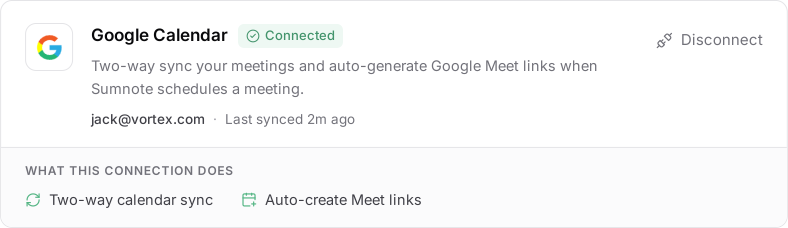
ConversationbecomesexecutioninaPMSystemthatreceiveswhatyoudiscuss.
That system and your meetings feed each other.
Your conversations update real work directly.
Decisions need a destination, not just an output
Most tools leave conversation as artifacts. Sumnote gives extracted work a native place to live.
Transcripts, summaries, and flat to-dos aren't part of the workflow where execution actually happens. Sumnote is a project management system that updates directly from your discussions, so decisions land where tasks, ownership, and project context already exist.

Execution & Conversation: developed together
This isn't generic project management with voice & chat integrations bolted on. The two were built together, so conversation can drive the work directly.
The project management and conversation layers were designed to work together from the beginning. That's why what you decide in a meeting can update your real work directly, instead of producing an isolated list of flat to-dos.
Decisions map cleanly into real work
Speech/chat recognition and work primitives share one grammar.
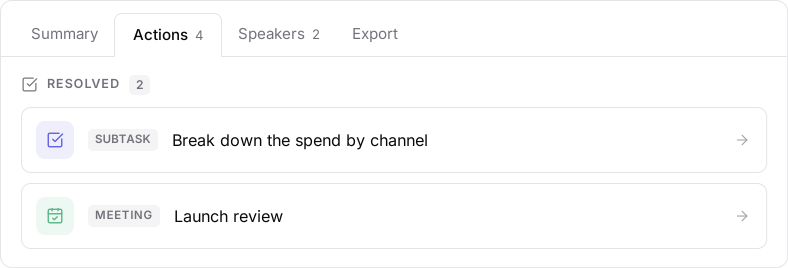
Conversation is transformed coherently into tasks, subtasks, ownership, scheduling, dependencies, blockers, milestones, and project attribution. What you decide isn't flattened into a summary; its full structure is carried through into real, connected work.
The output is not flat: it's structured and relational
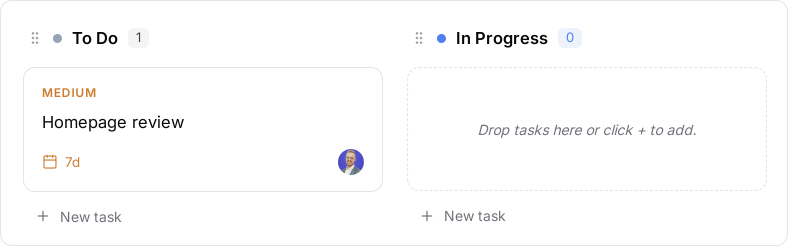
What emerges from conversation is not just a to-do list, but structured work that relates to existing workflows.
Real work is relational. Things belong somewhere, depend on something, block something else, move between contexts, and change over time. Sumnote reflects that by updating your workflows rather than generating isolated tasks.
Project Management becomes most powerful through meetings
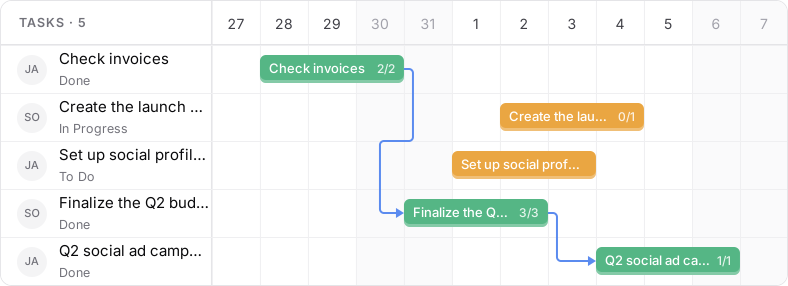
The project management layer can function independently, but its uniqueness appears most clearly when it is updated through conversation.
Sumnote's execution system is not just a passive destination for extracted items. It can stand on its own as a real work environment. But its deepest meaning appears when meetings become a direct way of shaping the work inside it.